Sovereign AI for Regulated Industries: Keeping Control of Your Data, Models and Knowledge
Control over data, models, and deployment has moved from a secondary operational preference to an absolute board-level requirement. Recent market shifts have proved that access to critical third-party models can change in an instant, for reasons entirely outside an enterprise's control. Treating a single external model as a hard dependency introduces systemic vulnerability. For organizations looking to preserve operational resilience, building an infrastructure that mitigates AI model continuity risk is no longer optional; it is the starting point for modern technology design.
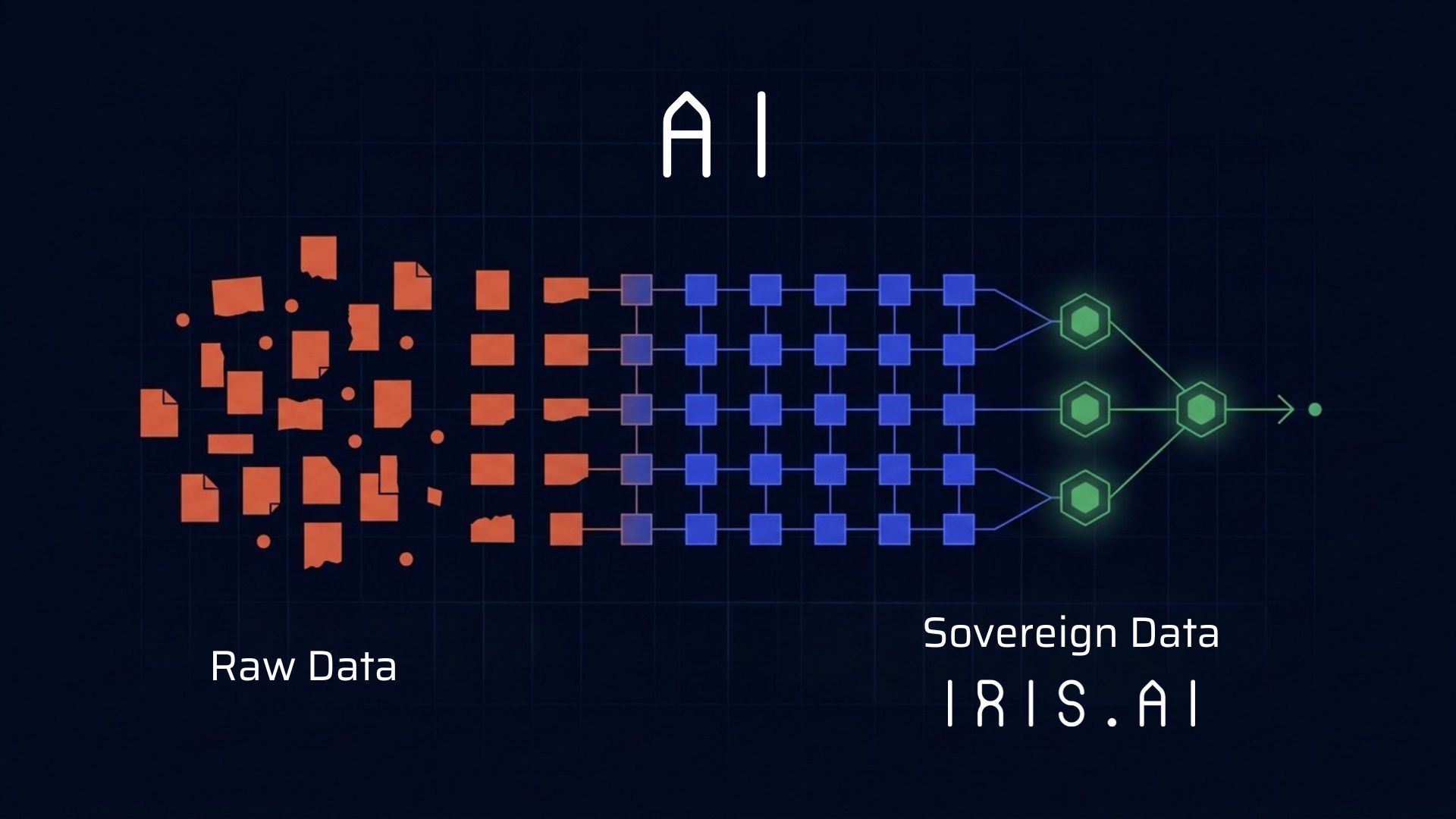
What Sovereign AI Actually Means
At its core, sovereign AI means retaining full control over your organization's digital intelligence. You decide where your models run, who can access your data, and how your systems continue to operate if an external provider deprecates a model, changes pricing, or complies with a foreign export restriction.
The Enterprise AI 2026 trends report's point is that sovereignty stops being meaningful at the infrastructure layer alone. Owning your compute matters less if the platform and knowledge layer running on top of it are still governed by someone else's roadmap. The same logic holds one layer further down. Infrastructure sovereignty protects where your AI runs. It does nothing to protect what your AI knows, the documents, terminology, and domain expertise a model actually reasons over. That knowledge layer is where lock-in tends to hide, because it's rarely built to be portable between vendors in the first place. An architecture that keeps this layer decoupled, so it can move to a different model or cloud without being rebuilt, is what actually closes the gap between owning infrastructure and owning outcomes.
Why Regulated Industries Feel It First
For industries like telecommunications, manufacturing, energy, utilities, and financial services, external infrastructure dependencies are not just technical risks. They are compliance violations.
According to an industry-standard Gartner forecast on technological sovereignty, 65% of governments worldwide will introduce technological sovereignty requirements by 2028 to protect from extraterritorial regulatory interference. This macro-environmental shift places immense, direct regulatory pressure on commercial enterprises operating within those borders.
Auditors, compliance officers, and regulators require a system where data lineage is fully auditable and reasoning paths are transparent. If your core operations rely on a proprietary model managed under foreign jurisdictions, proving compliance with local regulations, such as Europe's NIS2 or the EU AI Act, becomes practically impossible. Trust must be engineered directly into the system rather than patched on as an afterthought.
What Sovereign-Ready Architecture Looks Like
A sovereign-ready architecture requires a clear, functional separation of concerns. The framework depends on three primary pillars:
- A Controlled Context Layer: The enterprise must control a unified, stable knowledge layer that manages business terminology, domain ontologies, and source hierarchies independently of any large language model.
- A Model-Agnostic Interface: The system must utilize a robust model-agnostic design that allows models to serve as swappable, transactional components rather than load-bearing structural walls.
- Flexible Deployment Modes: The infrastructure must support deployment options tailored to the enterprise's unique risk profile, whether on-premises, within a private cloud, as a hybrid setup, or hosted in a secure, sovereign cloud environment.
Iris.ai operates precisely on these architectural principles. Built as a European, EIC-backed platform, Iris.ai is ISO 27001 certified and fully GDPR compliant. The platform enables enterprises to maintain direct ownership over their data and workflows, using a proprietary evaluation framework that verifies model accuracy and cost-performance without exposing proprietary telemetry to external APIs. Built-in traceability guarantees that every generated response is mapped directly back to its original structured or unstructured source documents.
The Strategic Advantage
In highly regulated sectors, sovereignty should not be viewed as a compliance constraint, but as a strategic business differentiator. In modern enterprise markets, trust is what converts.
Enterprises that can demonstrate the accuracy, lineage, and governance of their AI outputs are capturing market share from competitors who rely on opaque "black-box" systems. Ensuring complete control over your institutional knowledge preserves long-term corporate valuation, turning technical risk management into a highly defensible market advantage.
Keeping Control of Your Enterprise Future
The shifting geopolitical and regulatory environment of 2026 makes one reality clear: the organizations that successfully operationalize their own knowledge on terms they fully control will win the enterprise AI transition. Those relying on brittle, centralized external dependencies will remain stalled in the proof-of-concept phase.
At Iris.ai, we can show you how our model-agnostic, sovereign-ready infrastructure can protect your enterprise's operational continuity and data integrity.
Request a demo to see how we deliver enterprise AI on your sovereignty terms.
