Your Organization Has 80% Dark Data - Here's What It's Costing You
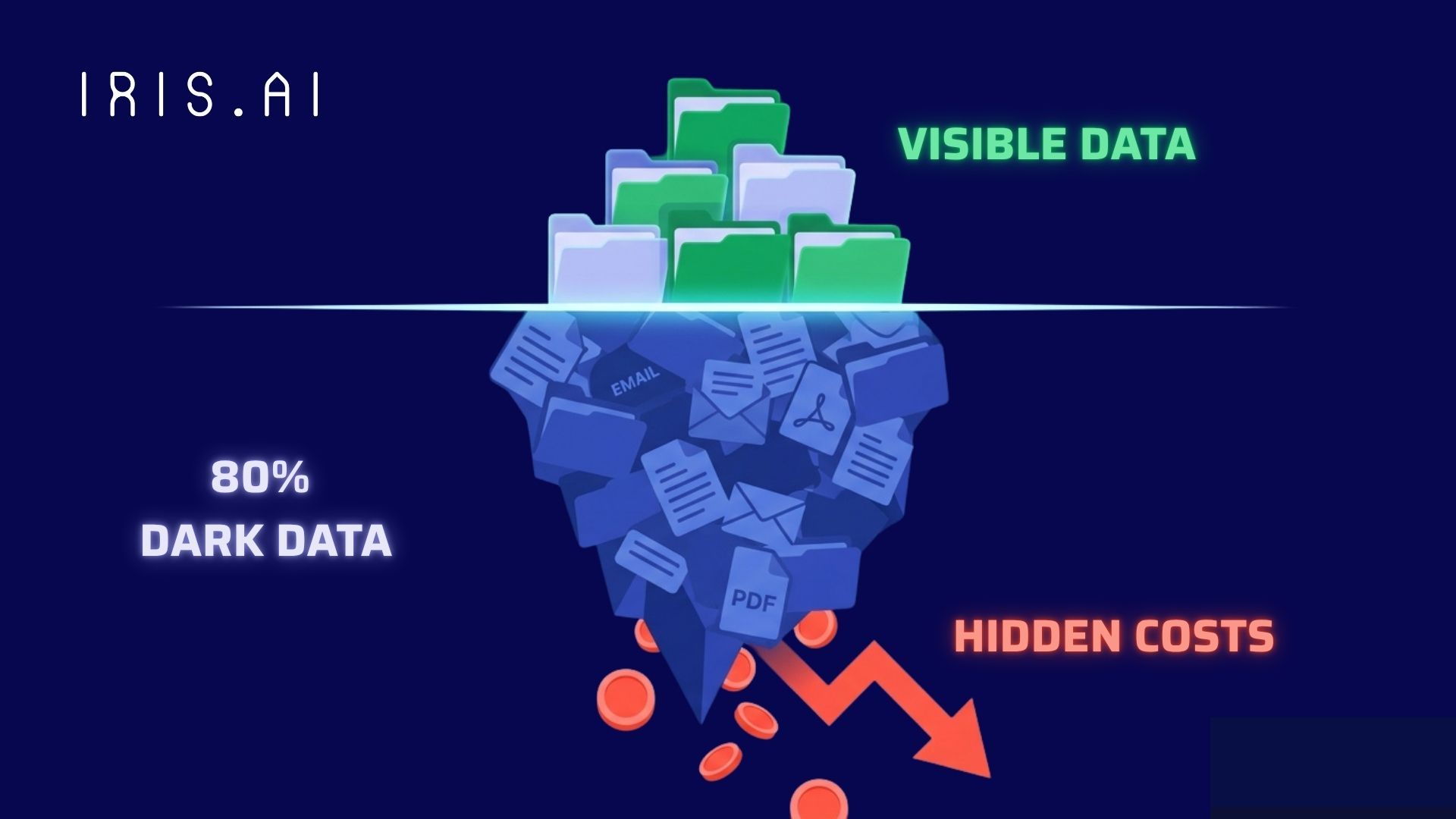
Did you know that up to 80% of enterprise data sits in unstructured, inaccessible formats? The vast majority of organizational information, thousands of emails, technical reports, research documents, and meeting notes is currently generating zero business value for your company. We call this "dark data," and while you might not use that specific term daily, you feel its visceral effects every time your team struggles to locate a critical piece of past research. This hidden bottleneck is quietly draining your resources, but it doesn't have to be this way.
What Is Dark Data?
Dark data is defined as the operational information your organization collects, processes, and stores during regular business activities, but never actually analyzes or uses. Unlike structured data that lives neatly in managed databases, dark data is trapped in disconnected silos. It lives in scattered PDFs, emails, research papers, and internal wikis.
Consider a pharmaceutical enterprise: decades of past clinical trial notes, failed formulation reports, and adverse event logs often sit in isolated archives. The knowledge exists, but because it is entirely unstructured, it remains completely invisible to the scientists who need it most. When a company's foundation is built on this fragmented, messy data, it creates a massive barrier to innovation. As Iris.ai CTO Viktor Botev notes, AI without knowledge integrity cannot be trusted.
The Hidden Costs
Allowing this information to sit idle isn't just a missed operational opportunity; it is an active, ongoing drain on your enterprise resources. We can break these hidden costs of dark data into three major categories:
- Productivity loss: On average, employees waste 1.8 hours every single day simply searching for scattered information.
- Missed intelligence: Strategic business decisions are routinely made without access to highly relevant institutional knowledge that already exists, entirely because leadership and R&D teams cannot locate it.
- AI readiness lag: Right now, 61% of companies admit their data assets aren't ready for generative AI. If your goal is to achieve true generative AI ROI, your unstructured dark data is actively blocking that success.
What Unlocking It Looks Like
Unlocking this data means shifting from hidden information silos to decision-ready intelligence. By implementing a purpose-built AI data foundation, enterprises can seamlessly ingest unstructured content and accurately structure it.
You don't have to look far to see the impact. When the Finnish Food Authority (FFA) assessed urgent risks like avian influenza, researchers faced tens of thousands of unstructured papers. Traditional keyword searches were so slow that reviews could take months. By implementing Iris.ai to scan massive volumes of scientific literature, the FFA reduced their literature review timelines by 95% and identified 200x more relevant papers. This is the power of activated knowledge.
Conclusion
It is time to reframe dark data. It is not a storage liability; it is your most valuable untapped asset. Data is an enterprise's gold, and it needs to be treated as such. Organizations that act early to establish strict knowledge governance and illuminate their dark data will gain a massive competitive advantage, scaling faster and more safely than their peers. You already have the knowledge you need to lead your market.
Turn Your Organization's Dark Data Into a Strategic Asset
See Iris.ai in Action
