Why 95% of Enterprise AI Projects Fail to Deliver ROI - And What the Winners Do Differently
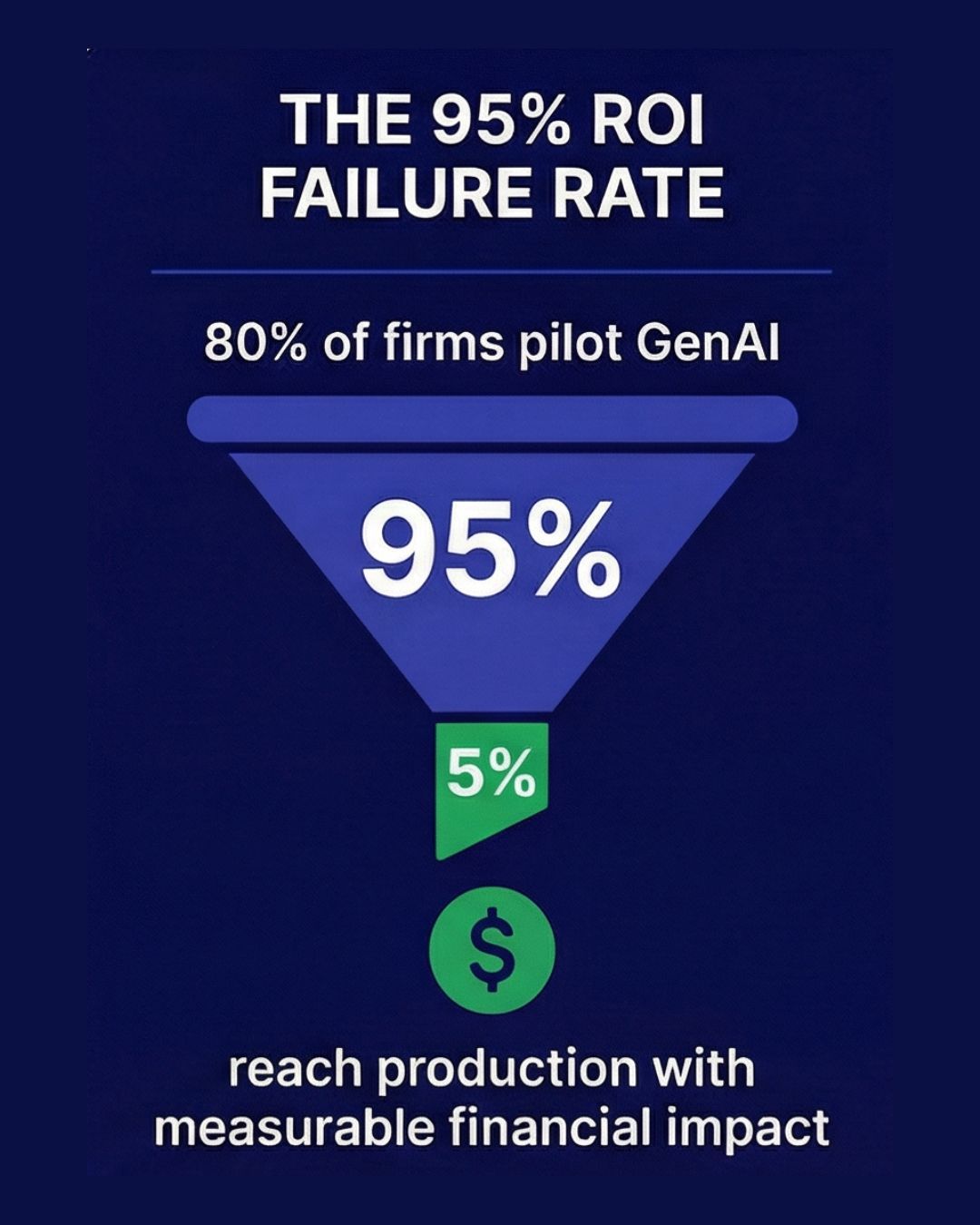
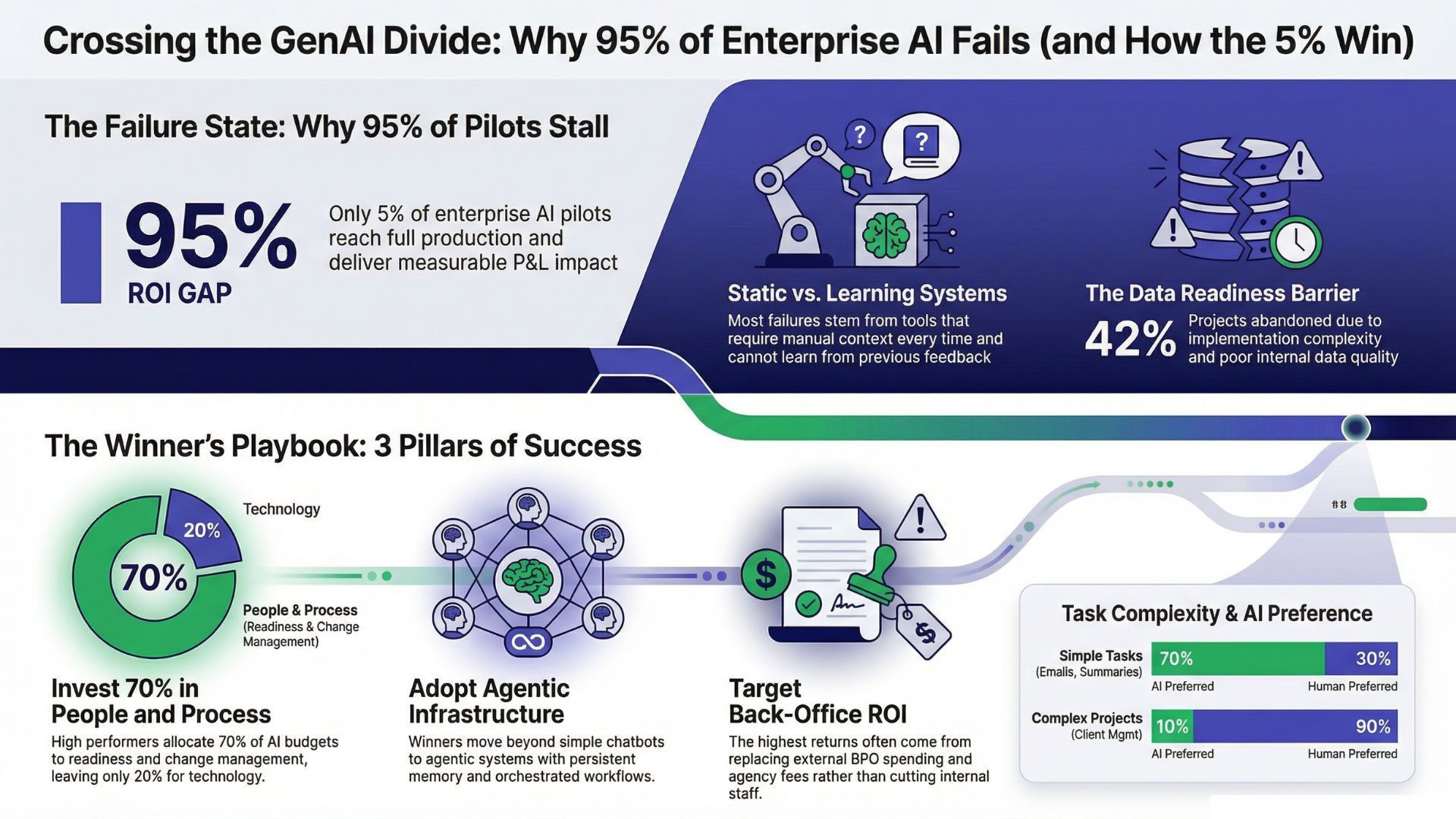
According to recent research from the MIT NANDA Initiative, up to 95% of enterprise generative AI projects fail to deliver measurable ROI. If you are leading an AI initiative today, you have to ask: is your project destined to be one of them?
The hard truth is that while Large Language Models (LLMs) are more powerful than ever, the technology itself is rarely the reason for failure. Instead, as noted by WorkOS Research, the collapse happens at the level of knowledge infrastructure - the hidden layer that sits beneath the AI. To fix the enterprise AI ROI gap, you must stop looking at the model and start looking at the foundation.
The Problem: A Foundation Built on Sand
The root cause of AI implementation failure is simple but systemic: organizations are deploying sophisticated AI tools on top of fragmented, unstructured, or ungoverned data.
When your data foundation is broken, even the most advanced model will produce unreliable, hallucinated, or unusable outputs. Research from Fullview indicates that 70-85% of AI initiatives fail to meet expected outcomes, and 61% of companies admit their data is not yet "AI-ready". As Victor Botev points out, deploying an agentic workflow on top of "dark data" or siloed legacy systems is the fastest way to ensure your pilot never reaches production.
What Winners Do Differently
While the majority of organizations remain stuck in "pilot paralysis," a small group of high performers are successfully extracting millions in value. For example, ArcelorMittal used Iris.ai to automate complex patent data extraction, cutting their analysis time by over 90% and turning a 4-hour manual task into a 4-minute, highly accurate AI workflow.
According to McKinsey & Company, these "winners" follow three distinct patterns:
Knowledge as a Strategic Asset
They treat their internal knowledge infrastructure as a core priority, not a backend IT concern. They understand that "contextualizing" data across systems is the key to unlocking true generative AI ROI enterprise-wide.
Early Governance and Evaluation
High performers establish rigorous quality controls and AI governance frameworks before they attempt to scale. Successful implementation often correlates with CEO oversight of governance policies.
Purpose-Built Foundations
Successful enterprises avoid the trap of retrofitting legacy systems. Instead, they deploy dedicated AI data foundations designed specifically for agentic reasoning and high-precision knowledge extraction.
The AI Data Foundation Layer
To bridge the gap between raw enterprise knowledge and reliable AI outputs, you need an AI data foundation. This is the connective infrastructure layer that unifies structured and unstructured data into a format AI can actually "understand" and act upon.
At Iris.ai, we explore this in our guide to Enterprise AI Alignment, framing as the critical infrastructure required for any AI initiative to scale. By building this foundation first, you ensure that your AI agents have the right context at the right time, moving your project from an experiment to a competitive advantage.
Conclusion
The generative AI ROI enterprise leaders seek is possible, but it requires a shift in strategy. AI projects fail when they ignore the foundation. When you prioritize a robust AI data foundation, ROI follows, allowing you to scale human capacity across more complex problems without scaling complexity.
See How Iris.ai Builds the Knowledge Foundation That Makes Enterprise AI Work
