Adopting AI in a Regulated Enterprise: Moving Beyond the Proof of Concept
The enterprise AI landscape has sharply divided into two categories: organizations running isolated experiments, and organizations deploying production-grade systems. For highly regulated industries, such as telecommunications, financial services, and healthcare, crossing the gap between those two stages has proven exceptionally difficult.
The friction is not caused by a lack of investment or technical ambition. It is a fundamental mismatch between how mainstream AI is built and what regulatory compliance actually requires.
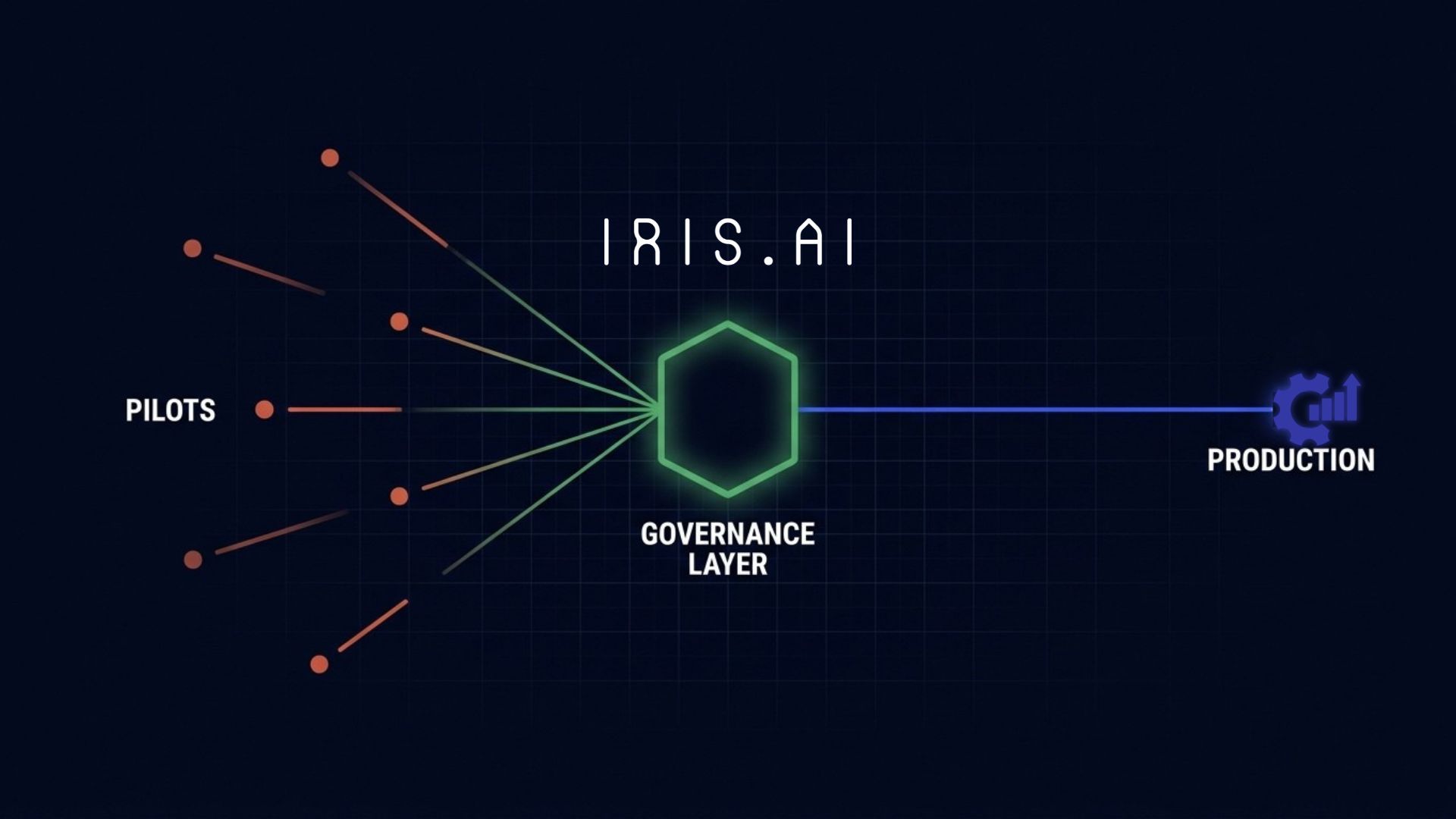
The Experimentation Trap
According to the comprehensive Agentic AI Adoption Statistics for 2026, enterprise organizations currently dominate agentic AI adoption at 25%. However, beneath that top-line metric lies a severe maturity gap: 62% of those enterprises remain trapped in the experimentation phase. Only 13% have successfully achieved full-scale deployment.
Why are so many well-funded initiatives stalling before reaching production?
The answer lies in the structural risk of deploying autonomous systems over un-governed data. Gartner predicts that 40% of agentic AI projects will be canceled by the end of 2027. When analyzing the specific drivers of this abandonment, the failures are overwhelmingly infrastructural rather than model-driven. The adoption data reveals that 38% of failed projects collapse due to inadequate data quality or availability, while 31% of enterprise failures are driven directly by cybersecurity and risk management concerns.
In sectors where compliance is non-negotiable, these architectural flaws are fatal. Within the financial sector, for example, 60% of technical leaders cite data governance and security as their primary barrier to deployment.
Why Conventional Architecture Fails Compliance
Most organizations attempt to build their AI infrastructure linearly. They select a powerful large language model (LLM), connect it to their enterprise data lake using standard vector retrieval, and then try to overlay security protocols, access controls, and compliance guardrails after the fact.
As we previously outlined in our technical breakdown of how enterprise AI should actually be built, this "context-last" architecture forces models to infer meaning from disconnected, fragmented data snippets. When an organization cannot mathematically guarantee the exact source document and reasoning path an AI agent used to generate a customer-facing financial or medical response, it cannot pass an audit.
Furthermore, hard-wiring your enterprise infrastructure to a single hosted model creates severe AI model continuity risk. If a provider deprecates that model, alters its security boundaries, or faces geopolitical export restrictions, the enterprise's entire compliance posture is immediately invalidated.
The Sovereign, Context-First Solution
To move beyond the proof-of-concept phase, regulated enterprises must completely decouple their knowledge foundation from the model execution layer.
By establishing an independent, context-first semantic environment, organizations can define strict access controls, resolve domain-specific terminology, and enforce source hierarchies before any language model is granted access to the data. This architecture ensures that data hygiene is resolved at the foundational level, directly addressing the root cause behind 38% of project failures.
More importantly, it provides absolute traceability. In the Iris.ai platform, every output is structurally mapped back to its verified source material. This allows auditors and compliance officers to trace exactly how a conclusion was reached, transforming a black-box AI interaction into an auditable, verifiable workflow.
By prioritizing this structured knowledge layer, Yettel Hungary created a model-agnostic workflow that achieved an audited 97% contextual accuracy rate, proving that high-performance AI and strict regulatory compliance can co-exist.
Building for Production
If your organization is spending millions on agentic AI but remains stalled in the pilot phase due to security, data governance, or compliance concerns, the issue is not your model. The issue is your foundation.
Iris.ai provides the secure, sovereign knowledge layer that regulated enterprises require to move AI into full-scale production safely.
Request a demo to review our technical framework and governance controls.
