What Iris.ai Does: From AI Researcher to AI Harness
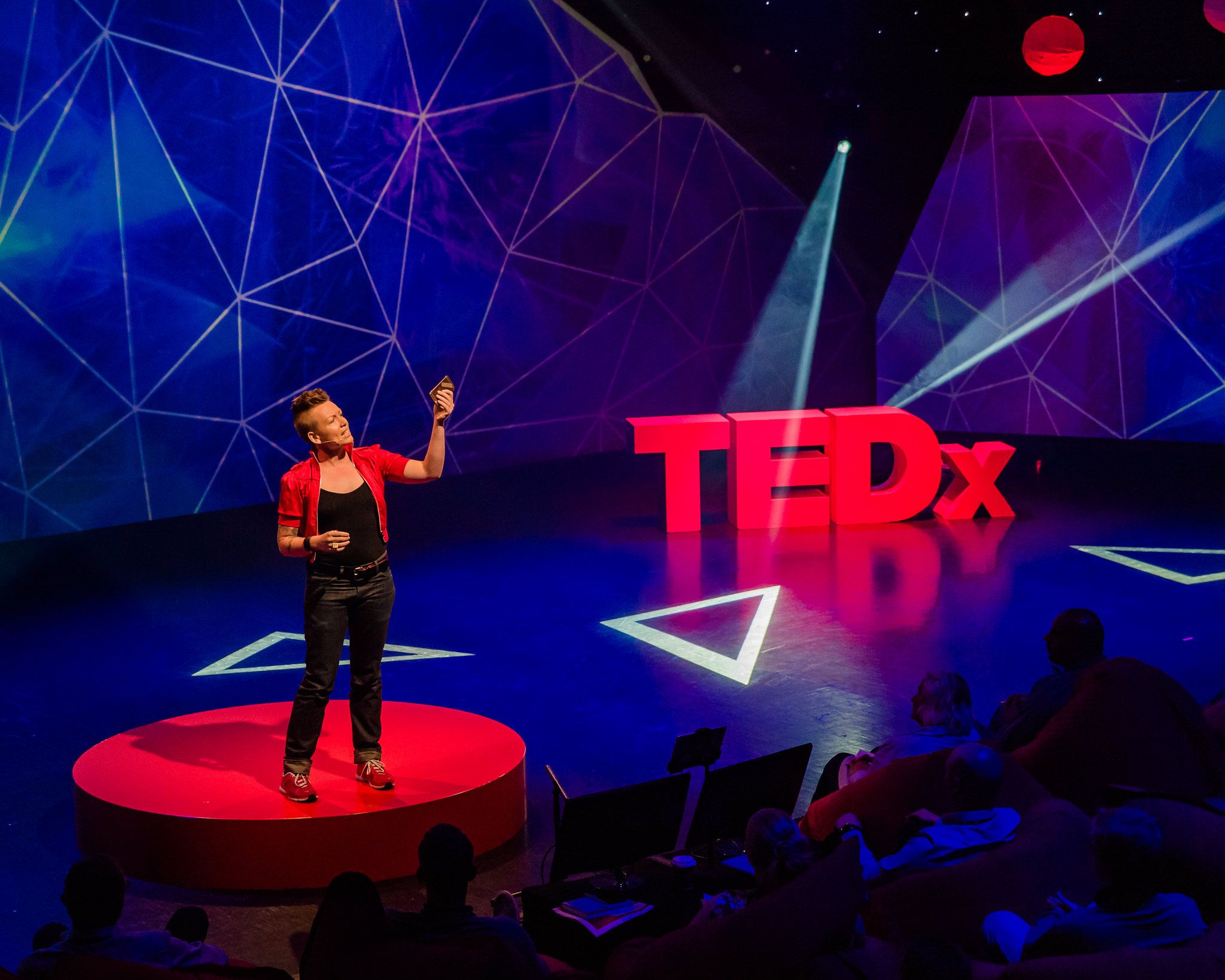
In early 2016, Anita Schjøll Abildgaard stood on a TEDx stage in a Dutch castle and announced an AI Researcher. Fully remote team. Co-founders in four countries. Norway's first AI startup, founded in 2015 and born at Singularity University.
Ten years later, Iris.ai runs that same research on retrieval and evaluation in production across steel manufacturing, telecom, and automotive, at companies such as ArcelorMittal and Yettel.
The customers changed in those ten years. The standard behind the product did not.
This blog explains what Iris.ai is, what we built, and how it changed over the last ten years.
What Is Iris.ai? What It Builds Today
Iris.ai builds the AI harnessing layer that lets enterprises in expert domains run AI they can control, trace, and verify. Three products do that work.
Axion turns unstructured enterprise data (PDFs, patents, reports, images, tables) into structured, machine-readable knowledge the model can work from.
Neuralith orchestrates agentic workflows over that knowledge, with retrieval strategies, evaluation, and output controls set per business process.
RSpace gives R&D teams precision search and analysis across scientific and technical literature.
Axion prepares the knowledge. Neuralith puts it to work. The controls run through both.
Where It Started
The first product was a retrieval system for research papers, connected to about 2 million Open Access articles. Then a filter tool for accurate data systematising.
People asked Iris.ai to build tools for legal texts and Twitter messages. The company turned that revenue down and stayed with the hardest text there is: science and technology, where there is little room for error and privacy requirements are high.
Iris.ai refused to sell consultancy hours. The company published research and shipped products.
The research thread ran from the WISDM metric paper to the ConSens metric: a decade of published work on measuring what language models actually return.
In 2021, the team began building the Researcher Workspace, the platform that became RSpace.
What Ten Years Tested
Iris.ai ran on research grants and a few patient angel investors until its Series A, and it still spent a disproportionate share of its budget on research. In December 2019, the AI for Good XPRIZE named Iris.ai one of its Top 10 finalists, from a field that started with over 150 teams.
In 2022, the year ended with the EIC Accelerator: Iris.ai was one of 78 companies funded from more than 1,000 qualified applicants. In May 2024, Iris.ai closed a €7.64M Series A led by Silverline Capital, with the EIC Accelerator Fund, which brought total funding to €16M.
In the same years, two waves of competitors came and went. A third wave arrived with GPT, most of it built on the APIs of the large model providers. Iris.ai kept building its own retrieval and evaluation.
What Changed, and What Did Not
What changed: the customer. Iris.ai moved from serving researchers and students as end users to serving the enterprise as a whole. Over the last year that meant a commercial pivot into a developer-facing platform, so client IT teams and system integrators can build on top.
What did not change: the standard. Iris.ai built its retrieval and evaluation for scientific text, where errors carry into every conclusion and privacy rules limit what a system may read. A nuclear operator, a pharma QA lead, and an automotive engineer apply the same tests before AI touches their work. Can they trace each answer to its source? Can they check the output? Can they prove what the model was allowed to read?
AI harnessing is the name for that standard, applied across the enterprise.
Anita wrote the rules down in June 2024, before Iris.ai had a name for the discipline. Keep client data away from third-party providers, and never use it to train models for other clients. Treat hallucination as a system problem: find, organise and retain facts through the whole pipeline. Give users evaluation frameworks for every model and feature. Adapt to each field's vocabulary. The first three rules are the data boundary, source traceability and verified output of a harnessed system. The fourth explains why the harness works in expert domains.
Proof: Three Customers, Three Numbers
ArcelorMittal cut competitive patent analysis workload by over 90% using Axion, at 94% extraction precision, across tens of thousands of patents in multiple languages.
Yettel cut LLM costs by 35% and reached 95+% contextual accuracy with a Neuralith-built AI contact centre, after evaluating 21 vendors.
The Finnish Food Authority cut literature review timelines from months to days using RSpace, processing 150M+ documents per request and identifying 200x more relevant papers than keyword search.
The Next Ten Years
Iris.ai spent its first decade proving that AI can meet the standard of science. It will spend the next one taking that standard to every expert domain where a wrong answer costs a recall, a fine, or a project. Iris.ai still publishes research, still ships product, and still thinks in ten-year perspectives. The next decade is for the expert domains that could not use AI safely before. They can now.
See what Iris.ai can do with your knowledge.
